
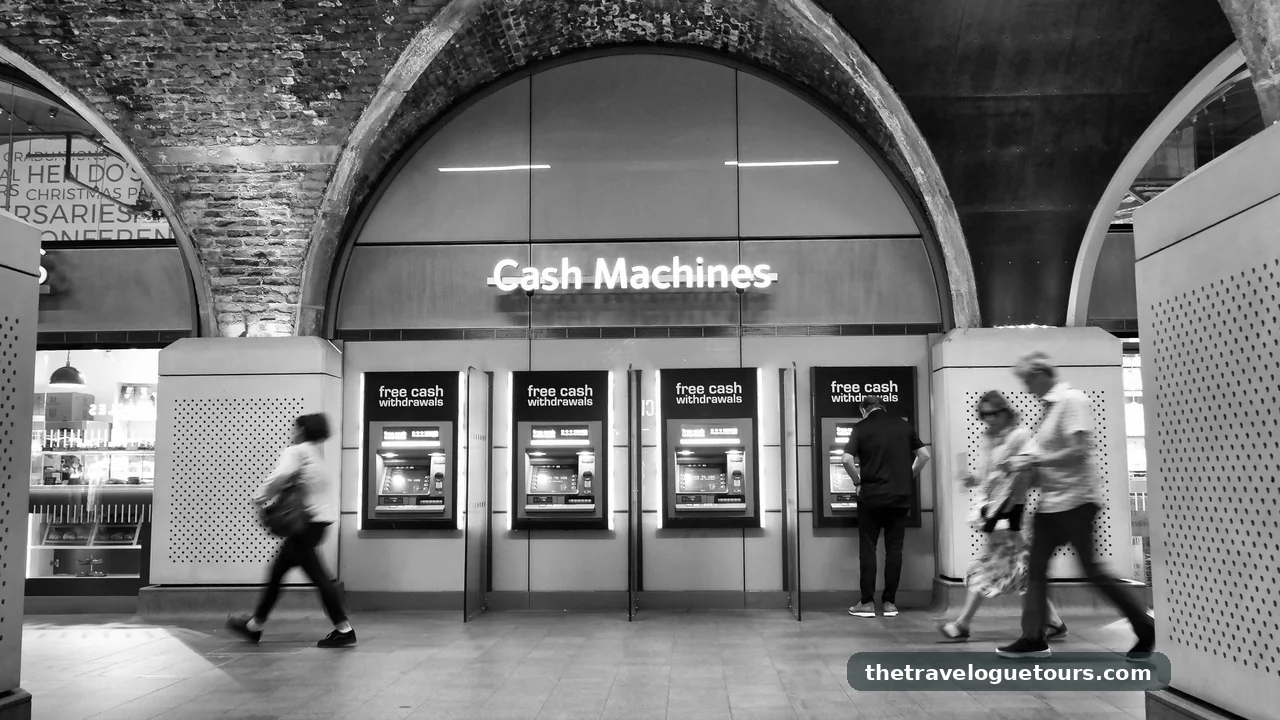
Avoid ATM Fees Abroad With the Right Bank Card
You land after a long flight, find the first ATM, and pull out the local equivalent of $200. Three weeks…
You land after a long flight, find the first ATM, and pull out the local equivalent of $200. Three weeks later you check your statement and realize that withdrawal actually cost you closer to $215.
That sinking feeling is one most travelers know far too well. Foreign ATM fees are silent budget killers, and they show up as tiny line items that add up to real money over a long trip. Most people never learn exactly who is charging them or why, so they just keep paying.
The good news is that these fees are almost entirely avoidable. With the right bank card and a few smart habits, you can pull cash from ATMs all over the world without handing a cut to 2 different middlemen every time.
How Foreign ATM Fees Actually Work
Every international ATM withdrawal can trigger 2 separate fees, and they come from two different players. Your own bank usually charges a foreign ATM fee, which often combines a flat amount with a percentage of the withdrawal. The ATM operator in the country you are visiting can add its own surcharge on top of that.
Then there is a third charge that hides in plain sight: the exchange rate itself. Some banks add a foreign transaction fee, typically around 1 to 3 percent, simply because the withdrawal involved a currency conversion. This fee is easy to miss because it is baked into the rate rather than listed as a line item.
On a single $200 withdrawal, you might pay $5 to your bank, $4 to the ATM operator, and another few dollars in conversion margin. Do that twice a week for a month and you have spent enough to cover a night in a decent hostel.
It helps to see how debit and credit cards differ on this front, which is why reading about the best no foreign transaction fee credit cards for international travel is a smart pre-trip move. Credit cards are excellent for purchases, but cash withdrawals still demand a good debit card with the right terms.
What to Look for in a Travel Bank Card
The ideal travel debit card has 3 qualities. It charges no foreign transaction fees, it charges no out-of-network ATM fee from its own side, and it reimburses the surcharges that foreign ATM operators tack on.
That last one is the rare quality. Most cards that waive their own fees still leave you paying the local machine’s surcharge, which in tourist areas can be surprisingly steep. A card that rebates those operator fees back to you is the gold standard for travelers, because it wipes out both sides of the fee equation.
Watch out for monthly fees and minimum balance requirements too. A card with zero foreign fees is not a deal if it charges you a monthly fee just to keep the account open. The best travel accounts are free to maintain and free to use abroad.
Ease of use matters as well. Look for an account you can open and fund online, with an app that lets you lock the card instantly, set travel notices, and see pending transactions. When you are in a foreign city with a frozen card, good mobile banking is worth more than a slightly better interest rate.
The Classic Example: The Schwab Debit Card
For years, the example travelers cite most often is the Charles Schwab Bank Investor Checking account, whose debit card has become famous in travel circles for worldwide ATM fee rebates. You can review the account’s current terms on the official Schwab checking page before making any decision.
Here is how it typically works. You use any ATM in the world, the machine’s operator charges its surcharge, and the bank reimburses that surcharge to your account at the end of the statement period. On top of that, the account has historically charged no foreign transaction fees of its own.
Under recent terms, this combination can mean a truly fee-free withdrawal almost anywhere. But terms change, which is why you should always verify the current fee schedule and rebate policy directly with the bank before you open an account or rely on it for a trip.
There are alternatives worth comparing, including several online banks and fintech accounts that offer low or zero foreign fees. What matters is not the brand name but the combination: no foreign transaction fee plus ATM surcharge rebates. Shop around and read the fine print of each account.
One more practical note: Schwab is a US-based bank, so this option suits US residents best. If you live elsewhere, look for a local bank or fintech with the same 3 qualities described above. Many countries have at least one account that competes directly on these terms.
Backup Strategies for When Things Go Wrong
Even the best card can fail you. Cards get swallowed by machines, accounts get frozen by fraud alerts, and networks go down at the worst possible moment. Always carry a second debit or credit card from a different bank, stored separately from your main one.
A small emergency cash stash is your second safety net. Bring a few hundred dollars or euros in clean, unmarked bills and hide them deep in your luggage. In a pinch, cash buys you the time to sort out a card problem without panic.
Tell your bank your travel dates before you fly. Most banks let you set a travel notice in their app in under a minute, and it dramatically reduces the chance of a fraud freeze the first time you use the card abroad. Set a notice for every card you carry, including the backup.
Card problems attract opportunists, so it also pays to refresh your instincts with our guide on how to avoid tourist scams abroad. A traveler standing at an ATM looking stressed over a declined card is exactly the kind of target scammers watch for.
ATM Habits That Save Money on Every Trip
Skip airport ATMs whenever you can. The machines in arrival halls typically charge the highest surcharges and the worst exchange margins in the whole country. Withdraw a small amount if you need taxi fare, then find a bank-branch ATM in town for the real withdrawal.
Always decline dynamic currency conversion. When an ATM asks whether you want to be charged in your home currency, the answer is no. The single most important habit is always choose to be charged in the local currency, because letting the machine convert for you adds a markup that is often far worse than what your bank would charge.
Choosing the local currency lets your bank handle the conversion at a rate that is usually much closer to the real one. That one screen choice can save you more money than any other habit on this list, and it costs you nothing to make.
Withdraw larger amounts less often. Since surcharges are often flat fees per transaction, two small withdrawals can cost twice as much as one bigger one. Balance this against safety and never carry more cash than you are comfortable holding.
Use bank-branch ATMs during banking hours. If the machine eats your card, you can walk inside and ask for it back. A random standalone ATM in a dark alley offers no such help, and it is also more likely to have a skimming device attached.
Cover the keypad when you type your PIN and glance at the card slot before inserting your card. Loose or bulky attachments on the slot can be a sign of a skimmer. These tiny checks take seconds and protect you from far bigger losses than fees ever could.
If you want a deeper breakdown of each fee type, NerdWallet maintains a useful explainer on international ATM fees. It is worth reading before a long trip, especially the section on how conversion markups quietly inflate the cost of every withdrawal.
Fee savings add up fastest when the rest of your budget is under control, so pair these habits with our guide to traveling the world for $50 a day. A few dollars saved at every ATM becomes real travel money by the end of a long journey.
A Quick Disclaimer
Bank fees and account terms change over time, and what was true last year may not hold today. Always verify the current fee schedule, foreign transaction policy, and ATM rebate terms directly with your bank before opening an account or depending on it abroad. Nothing in this article is financial advice, just travel experience.
ATM Fees FAQ
What is the cheapest way to get cash abroad?
Use a debit card with no foreign transaction fees and ATM surcharge rebates at a bank-branch ATM, and always withdraw in the local currency.
Should I let the ATM convert to my home currency?
No. Decline dynamic currency conversion and choose the local currency. The machine’s conversion rate typically includes a markup that costs you more than your bank’s own rate.
Are airport ATMs safe to use?
They are usually safe but expensive. Airport machines often carry the highest surcharges and worst exchange margins. Withdraw a small amount for immediate needs and use a bank ATM in town for larger amounts.
How much backup cash should I carry?
A few hundred dollars or euros in clean bills is a common emergency stash. Keep it separate from your wallet, and split it between your daypack and main luggage when you can.
Does the Schwab debit card really reimburse ATM fees?
Under its recent terms, the Schwab Bank Investor Checking debit card has reimbursed ATM operator surcharges worldwide with no foreign transaction fees. Terms can change, so confirm the current policy on Schwab’s official site before relying on it.





4 Comments