Lisbon in 3 Days: Trams, Tiles, and Ocean Air
Three perfect days in Lisbon: Alfama and the castle, Belem’s custard tarts, a Sintra day trip, tram 28 tips, and honest daily costs.
Lisbon does something to light that no other European capital manages. The sun bounces off the Tagus river and the white limestone streets, and even the tiled building facades seem to glow from inside.
Three days is the sweet spot for a first visit. It is enough for the old town and the castle, the riverside monuments of Belem, and a full day trip to the palaces of Sintra. This is the itinerary I give friends, with the tourist traps edited out.
Day 1: Alfama and the Castle
Start in Alfama, the Moorish old quarter that survived the 1755 earthquake. Its lanes are too narrow and steep for cars, which is exactly the point. Get there before 9 am and you will have the viewpoints almost to yourself.
Climb to Sao Jorge Castle, which opens at 9 am and costs around 15 euros. The castle itself is mostly ramparts, but the terrace views over the river and the red rooftops are the essential Lisbon panorama. Go early to beat both the heat and the tour groups.
Work downhill through the Se Cathedral, Lisbon’s oldest church, and stop at the Portas do Sol and Santa Luzia miradouros. A miradouro is just a terrace viewpoint, and Lisbon has them on every hill. Each one has a kiosk selling coffee and cheap wine, which is not a coincidence.
For lunch, find a tasca, a no-frills local eatery, and order whatever grilled fish is on the board. Lunch menus run 12 to 15 euros with wine included. The tourist restaurants around the castle charge double for half the quality.
End the day back uphill at the Miradouro da Senhora do Monte for sunset. It is the highest viewpoint in the city and the local favorite, with the castle lit gold below you. Then eat dinner in Alfama or Graca and listen to fado drifting from the taverns.
Fado is Lisbon’s mournful, beautiful folk music, and hearing it in a tiny Alfama cellar is unforgettable. Tasca do Chico in Bairro Alto has fado nights with just the cost of drinks. For the full dinner-and-fado experience, budget 30 to 50 euros at places like Clube de Fado.
Day 2: Belem and the River
Take tram 15 from Praca da Figueira west to Belem, the district of explorers. The ride takes 20 minutes along the river and the same Viva Viagem card works. Get off at the monastery stop and walk everywhere from there.
The Jeronimos Monastery is the masterpiece, a Manueline Gothic church and cloister built from the wealth of the spice trade. Entry is around 18 euros and the church itself is free. It holds the tombs of Vasco da Gama and the poet Camoes, and it is a UNESCO World Heritage site along with nearby Belem Tower.
No visit to Belem is complete without a pastel de nata from Pasteis de Belem, the bakery that has made them since 1837. They come out warm, dusted with cinnamon, and cost under 2 euros each. The line looks long but moves fast; there is seating for hundreds inside.
Walk the riverfront to Belem Tower and the Monument to the Discoveries, then cross to the MAAT museum if modern art is your thing. The riverside promenade is flat, breezy, and made for a slow afternoon. Rent a bike or just walk it.
Come back east for dinner at the Time Out Market in Cais do Sodre. It is touristy but genuinely good, with stalls from the city’s best restaurants under one roof. Budget 15 to 25 euros for dinner with a glass of vinho verde.
If you still have energy, Cais do Sodre’s Pink Street is the nightlife strip. Or take the ferry across to Cacilhas for dinner with the Lisbon skyline across the water. The ferry costs under 2 euros and runs every 15 minutes.
Day 3: Sintra Day Trip
Sintra is 40 minutes by train from Rossio station, and it is the single best day trip in Portugal. Trains run every 20 minutes and a return ticket costs about 5 euros. Go on a weekday and catch a train before 9 am.
The star is Pena Palace, the mad Romanticist castle in red and yellow on the hilltop. Book the first entry slot online (around 20 euros) and arrive at opening.
By noon the palace is packed and the magic fades. The park around it is worth two hours on its own.
Walk or take the 434 tourist bus down to the Quinta da Regaleira, the estate with the famous Initiation Well, a spiral staircase descending into the earth. Entry is around 12 euros and it is weirder and more wonderful than the palace. Allow two hours.
If you have time and legs left, the Moorish Castle walls give the best views of Pena Palace itself. Then consider Cabo da Roca, mainland Europe’s westernmost point, reachable by bus from Sintra town. The cliffs at sunset are spectacular.
Eat in Sintra town before heading back. The travesseiros, almond and egg pastries from Piriquita bakery, are the local rival to the pastel de nata. A box to take home costs a few euros and will not survive the train ride.
Sintra is one of the great places to visit in Europe that justifies its fame, and planning it as a day trip keeps your Lisbon base simple. For more on building days like this into a longer trip, see our guide to creating the perfect travel itinerary.
Tram 28 Without the Tourist Trap
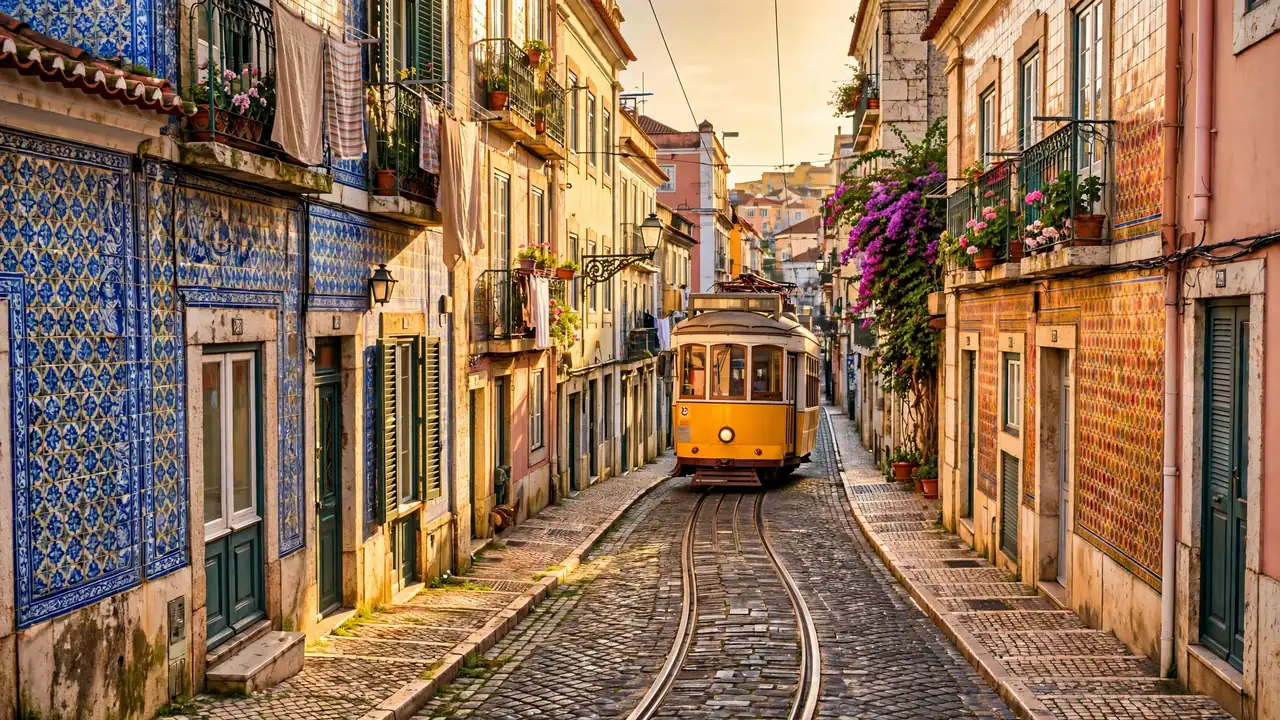
Tram 28 is the famous yellow tram rattling through Alfama and Graca, and it is both wonderful and massively overcrowded. The secret is timing: ride tram 28 at 8 in the morning, or don’t ride it at all. Before 9 am you might get a seat; after 10 am you will stand in a sweating queue.
Board at Martim Moniz, the start of the line, where you are most likely to get a seat. The full route to Prazeres takes about 40 minutes and passes the Se, the castle viewpoints, Chiado, and Estrela Basilica. Sit on the right side going west for the best views.
Do not pay the 3 euro onboard fare. Buy a Viva Viagem card (50 cents) and load it; the tram ride then costs around 1.65 euros.
Better yet, get the 24-hour Carris and Metro pass for about 7 euros if you are using transit all day. Pickpockets work the crowded midday trams, so keep your bag zipped and in front.
Where to Stay by Neighborhood
Alfama is the dream: tiny lanes, fado spilling from doorways, castle views. It is also steep, noisy in summer, and a maze at night. Choose it for charm if your knees are good.
Baixa and Chiado are the central, practical choice, flat and walkable to everything. Hotels cost more here but you will save on transit. This is where I put first-timers who want an easy base.
Graca is the local favorite, with the best miradouros and lower prices than Alfama. Bairro Alto is for nightlife; fun but loud until 3 am. Principe Real is trendy and pricey, Cais do Sodre is convenient for the airport metro.
Budget 25 to 40 euros for a good hostel dorm bed, 80 to 120 for a mid-range hotel, and 60 to 90 for a well-reviewed Airbnb room. Book Alfama and Baixa early for spring and autumn; they sell out first.
What 3 Days in Lisbon Costs
A budget traveler can do Lisbon on 60 to 80 euros a day: hostel bed, tasca lunches, one paid attraction daily. Mid-range is 120 to 160 euros a day with a hotel, sit-down dinners, and the Sintra trip included.
The city is kind to wallets in small ways. A bica (espresso) at the counter costs 1 euro, a glass of house wine 2 to 3, and the metro from the airport is under 2 euros. Museum entries add up, so pick your must-sees rather than buying a pass blindly.
Lisbon is also well placed for shoulder-season savings. Our guide to the best time to visit Europe by season and budget breaks down when prices drop. And if Lisbon leaves you hungry for more, these hidden European cities make excellent next stops.
FAQs
Is 3 days enough for Lisbon?
Yes for the highlights: Alfama, Belem, and Sintra. You will leave with a list of things to come back for, which is the correct outcome. Add a fourth day for Cascais and the coast if you can.
How hilly is Lisbon, honestly?
Very. The seven hills are real and the cobblestones are slippery when wet. Wear proper walking shoes, use the funiculars and elevators (the Santa Justa lift, the Gloria funicular), and plan your days downhill where possible.
Is the Lisboa Card worth it?
Only if you plan to visit many paid museums in 24 hours. For this itinerary, pay-as-you-go with a Viva Viagem card is cheaper. Do the math on your specific museum list before buying any pass.
What is the best time to visit Lisbon?
April to June and September to October have warm days, cool nights, and thinner crowds. August is hot and packed, and the sardine festivals of June are wonderful if you book ahead. Winter is mild but rainy.
What day trips work besides Sintra?
Cascais is 40 minutes by train, a handsome beach town with a lovely old center. Evora in the Alentejo has Roman ruins and bone chapels, about 90 minutes by bus. Both are easy half or full days.
For official events and current opening hours, Visit Lisboa is the city’s tourism site and it is actually useful. Check it before you go, especially for festival dates.
Lisbon is a city that rewards slowing down. Take the long way through Alfama, linger at the miradouro, order the second coffee. Three days will not be enough, and that is the point.