
Thailand Beyond Bangkok, The Complete Guide
Bangkok is done. Now come the mountain temples, the quiet islands, the drowned kingdoms and the real Thailand. Your complete guide to everything beyond the capital.

The Thailand Nobody Shows You First
You did Bangkok. The Grand Palace, the rooftop bars, the midnight pad thai that ruined all other pad thai. Two days, maybe three, and now the city has given you everything it was going to give you.
The question is what comes next, and this is where most first trips quietly stall. People book one beach and call it Thailand. You are here because you suspect the country is bigger than that, and you are right.
Past Bangkok, Thailand splits into regions that feel like different countries. Mountain temples in the north, drowned kingdoms in the center, jungle waterfalls in the west, and two separate island coasts running on opposite seasons. This guide walks through all of them, with the honest tradeoffs nobody puts on a postcard.
Chiang Mai and the North
Chiang Mai is the north’s capital of calm, a walled old city of temples, night markets, and slow mornings. Wat Phra That Doi Suthep sits on the mountain above town, and the climb up its 306 steps earns the view across the whole valley. Give the city three nights minimum, because the first day always dissolves into jet lag and coffee.
The north is also where you meet elephants, so choose carefully. True sanctuaries never let you ride, they keep visitor numbers low, and the elephants behave like elephants, not performers. If a camp offers riding, bathing shows, or unlimited selfies, walk away, because your baht funds the practice.
Food is the third reason the north wins. Khao soi, the coconut curry noodle soup, tastes different in every shop along the old city walls. Our street food diaries across Southeast Asia show how a single dish can anchor a whole trip, and khao soi is that dish here.
Chiang Rai Day Trip
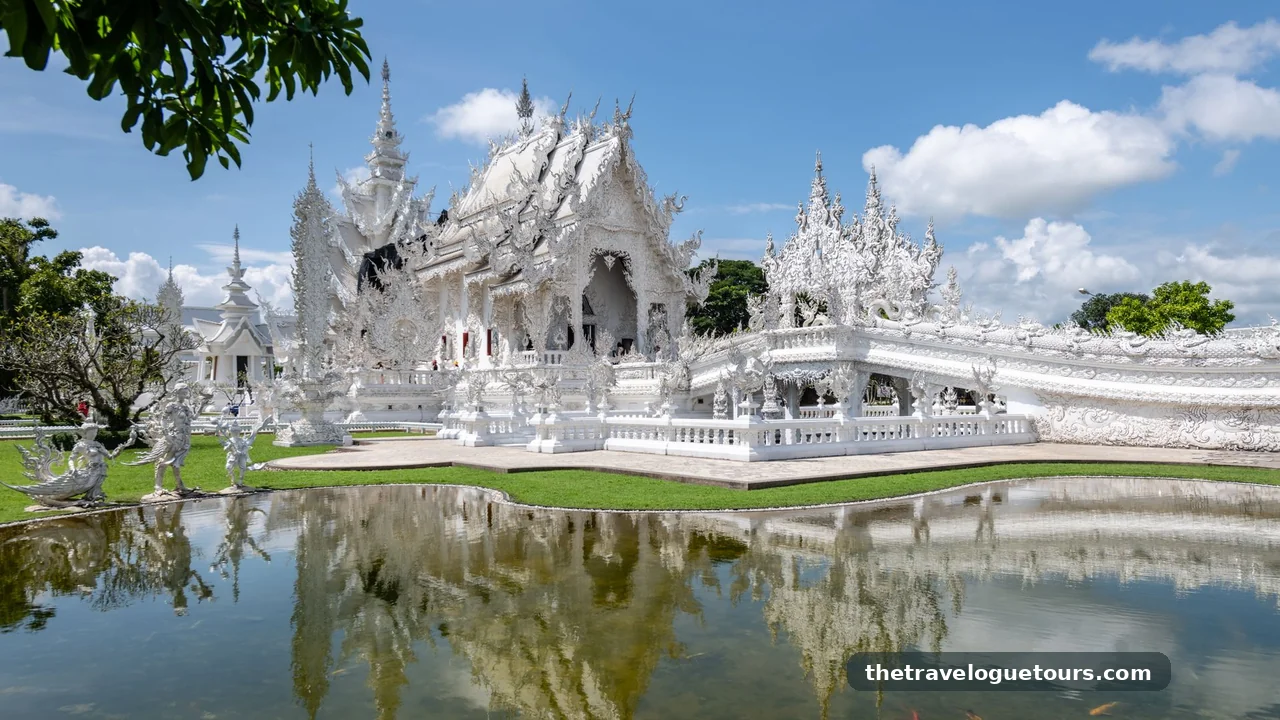
Three hours north of Chiang Mai by bus, Chiang Rai makes an easy day trip or a single overnight. Wat Rong Khun, the White Temple, is the main event, a blinding white contemporary temple covered in mirrored glass. Go early, because the tour buses arrive by ten and the magic thins with the crowd.
The Blue Temple, Wat Rong Suea Ten, sits on the other side of town and costs nothing to enter. Pair the two temples, eat in the night bazaar, and you are back in Chiang Mai by evening with a full memory card.
Ayutthaya and Sukhothai
Before Bangkok, there was Ayutthaya, the old capital, an island of brick prangs and headless Buddhas wrapped in banyan roots. The train from Bangkok takes about two hours, and renting a bicycle at the station is the classic move. The Tourism Authority of Thailand lists the key ruins and their opening hours if you want to plan the loop before you go.
Sukhothai is further north and quieter, a thirteenth century kingdom spread across lotus ponds and forest. It takes more effort to reach, which is exactly why the sunrise there feels like it belongs to you. Stay one night inside the old city walls if you can.
Kanchanaburi
Two to three hours west of Bangkok by bus or train, Kanchanaburi is waterfalls, jungle, and heavy history. The Death Railway and the Bridge over the River Kwai tell the story of the wartime forced labor camps, and the museums treat it with proper gravity. Give the history a full morning before the heat builds.
Then the landscape takes over. Erawan National Park and its seven tiered falls hold some of the prettiest swimming holes in the country. Go on a weekday morning, because weekends belong to Bangkok’s own escapees.
The Andaman Coast: Phuket, Krabi, Koh Lanta
The Andaman side is the Thailand of the postcards: limestone karsts, longtail boats, water so clear it looks edited. Phuket is the gateway with the big airport, but Krabi’s Railay Beach and the Phi Phi islands are the reason to keep moving. If the crowded sand puts you off, our guide to the best offbeat islands in Southeast Asia lists the ones the crowds miss.
Koh Lanta is the slow island, good diving, long empty beaches, none of the full moon chaos. Pick it when you want to exhale. Phuket’s old town, with its Sino Portuguese shophouses, is worth half a day even if the beach scene is not your thing.
The Gulf Coast: Koh Samui, Koh Phangan, Koh Tao
The Gulf islands run on a different season, which is the whole point of choosing sides. Koh Samui is the polished one, resorts and beach clubs, while Koh Phangan splits between party beaches and silent yoga retreats. Koh Tao is the diver’s island, where an open water course costs a fraction of the price back home.
The honest tradeoff is simple. The Gulf is easier and more developed, the Andaman is more dramatic. Nobody gets both at their best in one trip, so pick by season and commit to the choice.
When to Go: The Seasons Are Not One Season
Thailand has three tourist seasons, and they hit the two coasts differently. November to April is dry and perfect on the Andaman side, but the Gulf gets its rain from October to December. May to October flips the script, with rougher seas in the west and calmer days in the east.
The north has its own calendar. November to February brings cool mountain air, while March to May brings the burning season, when field fires haze the skies. If you are still deciding how long the whole trip should be, our guide to how many days you need in Thailand maps the options by travel style.
Getting Around: Trains, Ferries, and Cheap Flights
Thailand’s trains are slow, cheap, and wonderful. The overnight sleeper from Bangkok to Chiang Mai saves a hotel night and wakes you up in the mountains. Book first class sleepers early in high season, because they sell out, and check current timetables on the Lonely Planet Thailand guide alongside the official railway site.
Ferries connect the islands, but they stop running in bad weather, so build in buffer days. Domestic flights on budget carriers are often cheaper than the ferry plus bus combination, and they buy back a full beach day you would otherwise lose to transit.
Money and Scams: The Honest Part
Thailand is cheap until it is not. Street food costs almost nothing, but tourist menus, island prices, and special tuk tuk deals add up fast. Carry small bills, because nobody ever has change for a thousand.
The scams are famous and avoidable. The Grand Palace is not closed today, the gem shop is not a once in a lifetime deal, and a tuk tuk offering a free city tour is selling you to shops. Say no with a smile and keep walking.
Thailand Beyond Bangkok FAQ
How many days do I need for Thailand beyond Bangkok?
Ten to fourteen days covers it well: three to four in the north, four to five on the islands, and a day trip or two in between. Less than ten feels rushed, and more than fourteen lets you add both coasts.
Which coast should I choose, Andaman or Gulf?
Choose by month. November to April favors the Andaman coast, while the Gulf is better from May to October. Picking the wrong side in the wrong month is the most common Thailand planning mistake.
Is Chiang Rai worth a day trip from Chiang Mai?
Yes. The White Temple and the Blue Temple are unlike anything in Chiang Mai, and the three hour bus ride each way is straightforward. Leave early to beat the tour buses at the White Temple.
Are elephant sanctuaries in Thailand ethical?
Some are, many are not. Ethical sanctuaries never allow riding, keep visitor groups small, and let elephants behave like elephants. If a camp advertises rides or bathing performances, it is not a sanctuary.
How do I get around Thailand cheaply?
Overnight sleeper trains cover the long distances, songthaews and local buses handle the towns, and budget domestic flights win when the price beats the ferry. Avoid private taxis for anything longer than a short hop.
You came to Thailand for Bangkok and stayed for everything past it. Pick your coast by the season, give the north at least four days, and leave two days empty, because the best moments here are the ones you cannot schedule.
The country rewards the traveler who moves slowly. Start moving.



4 Comments